Ann Baker helped lead Selby Creek restoration efforts
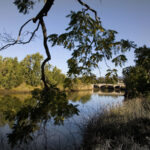
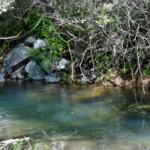
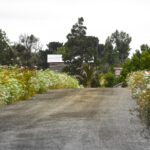
Water flows through Selby Creek
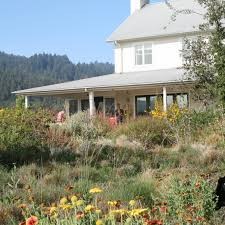
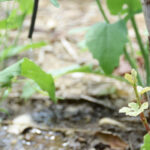
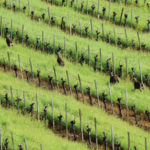
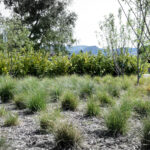
Native plants now populate Selby Creek, eliminating habitat for harmful sharpshooter species.
Growing up on the Larkmead Property, Kate Solari Baker saw the changes in Selby Creek firsthand. Her family made restoration of Selby Creek a priority.
Restoration of the Napa River is a testimony to the power of public-private partnerships in revitalizing the health of waterways and riparian lands. More than 70 property owners are contributing to four ongoing collaborative projects from Oak Knoll to just south of Calistoga, along the main stem of the Napa River. Napa Valley vintners and grape growers play a critical role, giving up valuable land and signing long-term agreements to propel restoration projects forward. Their contributions include the rededication of more than 70 acres of vineyard land to native riparian habitat along the river.
"Landowners see the future for their kids engaging with the river. Where there were 20-foot incised banks and impenetrable Himalayan blackberry, Arundo, and other invasive species, we now have access to the river again."
Davie Piña
Piña Vineyard Management
What Motivates Restoration?
Historically, the Napa River meandered through wide swaths of riparian forest and wetlands, regularly overtopping its banks and flooding surrounding lands during heavy rains. Throughout the 20th century, development steadily encroached. Dams were installed, areas of the river were channelized and extensive berms and levees were installed to prevent flooding. By the mid-20th century practices included putting cars, refrigerators, even mattresses, along the side of the river. Over decades the concentration and increased velocity of river flows led to incising of riverbanks – creating deeper channels. Large areas of riparian vegetation were removed or compromised, paving the way for invasive species to take over, many of which are hosts for sharpshooters, vectors for the devastating Pierce’s Disease. At the same time runoff and erosion brought fine sediment into the river, jeopardizing spawning habitat for Chinook salmon and Steelhead trout.
In 1998 the California EPA declared the Napa River impaired and the State Water Board set reduction standards for the Total Maximum Daily Load or TMDL of fine sediment into the river. In response, community leaders started championing collaborative efforts to restore the river’s health. Projects took shape along with creation of the Napa Green Land program.
Larkmead and the Selby Creek Restoration Story
Both the Napa River and the Selby Creek tributary flow through Larkmead Vineyard’s property. In the late-1990s, Larkmead had lost more than 1,100 vines to Pierce’s Disease and noticed significant riverbank erosion and areas of Vinca, Evergreen, and wild grapes, which hosted sharpshooters year round. Ann Baker, landscape architect and the daughter of Larkmead owners Kate Solari Baker and Cam Baker, led the charge to repair Selby Creek. Working with Bioengineering Associates, the Bakers self-funded restoration of three key areas of the creek in 1999 and 2000.
"Once you understand how the landscape used to look, how it used to function, you see that every time you look at the river today."
Ann Baker
Landscape Architecture
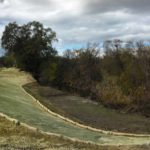
They removed 12’ thickets of Himalayan Blackberry and Arundo, tore out Vinca and wild grapes, and planted sedge grasses and other native plants and trees. Beneath banks with high incision on vulnerable out-curves they built siltation baffles: perpendicular willow cuttings planted to grab sediment and slow water, naturally rebuilding the riverbank. Around the winery they planted a native garden and added swales to slow overland water flow and recharge groundwater. They got an Environmental Quality Incentives Program grant through the National Resource Conservation Service to revegetate ditches and install weirs. Seeing success, in 2006 the Bakers reached out to their neighbors, who were also battling Pierce’s Disease and erosion, and proposed a cross-property creek restoration. Kate says, “It helped for our neighbors to see the success of work we had done and the investment we were willing to make.”
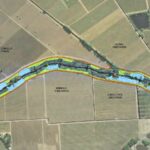
Ultimately 13 landowners came together, participating in numerous planning meetings. They agreed to self-assess their properties based on length of creek frontage to match 20-25% of the cost of the restoration work. With help from Bioengineering Associates, the group secured three state and local grants, for a total of more than $1.8 million for restoration work along roughly two miles of Selby Creek between 2009 and 2011.
"You need a few champions. And build in some fun. Landowners are going to be put in a lot of time and effort. As you build camaraderie everyone becomes more engaged."
Ann Baker
Landscape Architecture
Now, along this two mile stretch of creek, are over a thousand replanted native trees, shrubs, flowers and grasses like dogwood, walnut, manzanita, grey pine, oak seedlings, cottonwood, alder and willow replacing invasive plants and revegetating severely degraded banks. Ann says, “Part of the goal was to create something transitional – building soil and shade to help establish typical riparian cover.”
Another major goal was to cool the water for fish habitat. In sections with narrow channels and high water velocities the group installed large rock structures to drive water toward the center and create more pools. As a result, steelhead have returned to spawn, invasive plants are under control, erosion is minimal and no sharpshooters have been trapped since restoration.
"The system has been in equilibrium for five years now. Restoration exceeded what we could have expected. With the recent heavy rains there has been no noticeable erosion. The amount of resilience is impressive."
Ann Baker
Landscape Architecture
Larkmead Vineyards is a Napa Green Certified Winery.
About napa green
Napa Green is a global leader in sustainable winegrowing, setting the highest bar for sustainability and climate action in the wine industry. Napa Green facilitates systematic soil to bottle certification for wineries and vineyards, and provides the resources, tools and connections to continuously level up leadership. In 2021, Napa Green was the first sustainable winegrowing program in the world to redevelop Vineyard certification standards to focus on climate action, regenerative carbon farming, and social equity. In 2022, Napa Green and community partners launched the first of its kind, six-event RISE Climate & Wine Symposium (formerly THRIVES) with over 65 leading speakers and 40 “Sustainable Services & Solutions” partners and sponsors.