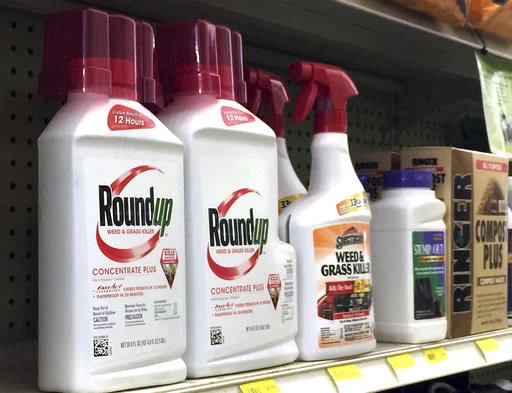
Despite diametrically opposed studies on its safety, Napa Green recently announced that it will require members to phase out the use of Roundup and other synthetic herbicides by 2026 and 2028, respectively.

Katie DeBenedetti | napa valley register
Despite diametrically opposed studies on its safety, Napa Green recently announced that it will require members to phase out the use of Roundup and other synthetic herbicides by 2026 and 2028, respectively.
On Thursday, the nonprofit focusing on vineyard and winery sustainability will hold a town hall and panel with industry experts to discuss the decision to move toward herbicide-free weed management practices in the coming years.
“We are the first program globally to redevelop our vineyard standards to focus on climate action and regenerative farming and social equity. We set an incredibly high bar,” executive director Anna Brittain said.
In 2021, the nonprofit convened a Pesticide Working Group to revise its Vineyard Certification Standards, she said. At the time, the organization chose not to require that vineyards be herbicide-free, but they did designate a new “gold level” standard specifically for organic and herbicide-free growers.
It also introduced requirements for all growers to limit herbicide use. Brittain said the new standards called on growers to lower herbicide use by 5% each year, and limit when and where they applied herbicides to limit runoff potential.
The working group has continued to meet biannually in the two years since the revision, and this year the group reached a majority conclusion that synthetic herbicides needed to be phased out. This will begin with Roundup, but in 2028, it will also include common alternatives like Lifeline and Finale XL, which uses glufosinate-ammonium as its active ingredient.
Brittain said that this decision was not an easy one. Getting rid of herbicides requires a “systematic change to farming” on the part of growers who have relied on them for weed management. Other methods include more hand weeding, which means more paid hours of manual labor. Alternatively, switching to mechanical methods of weed removal, like tractors and plows, require a fairly large monetary investment, and generally take longer.
Additionally, 37% of Napa Green’s current members — as well as those in the process of getting certification — still use synthetic herbicides, and Brittain believes there is a chance some members will leave the organization with this change.
For Napa Green, the pros outweigh the cons.
Synthetic herbicides are “reducing diversity in the soil, it’s reducing the health of the microbiome, and all the microbes and the fungal networks in the soil when you’re applying this chemical to the soil,” she said. “From a soil health standpoint, we felt that was pretty unequivocal. We’re very focused on regenerative agriculture and it’s hard to say you’re working on regenerative agriculture if you’re not regenerating soil health.”
Adding to the confusion and controversy, two major agencies focused on cancer and health have come to completely different conclusions when it comes to glyphosate.
The substance has been deemed “probably carcinogenic to humans” by the International Agency for Research on Cancer. It has also been linked to the development of non-Hodgkin’s lymphoma after long-term, repeated exposure and threatened species including the monarch butterfly and honeybees, according to Napa Green.
However, the U.S. Environmental Protection Agency has said “there are no risks of concern to human health when glyphosate is used in accordance with its current label. EPA also found that glyphosate is unlikely to be a human carcinogen.”
And Bayer, the current producer of Roundup (which was brought to market by Monsanto in 1974), states that the product can be used safely.
“Glyphosate and Roundup are among the most thoroughly studied products of their kind, which is a major reason why farmers around the world continue to rely on these products,” a Bayer spokesperson said via email. “For 50 years, leading health regulators around the world have repeatedly concluded that glyphosate-based products like Roundup can be used safely as directed.”
Molly Hodgins, a viticulture professor at Napa Valley College, said that whether or not growers should move away from herbicides entirely isn’t clear.
“I think it’s a tough call,” Hodgins said. “The soil is generally healthier when it’s kept in an organic state, which is having weeds. There’s more organic matter in a soil that is allowed to have weeds grow. But managing undervine weeds with mowing is more expensive and it is more work, so I think there is room for some herbicides in a sustainable program.”
But worries about the health effects of Roundup and other herbicides like it are why Randle Johnson, a longtime Napa grape grower, decided to stop using all weed killers in 2019.
He’s been a winemaker in Napa for almost 50 years, and remembers when Roundup was first introduced to growers.
“I was around when Roundup hit the market and it was viewed as a silver bullet. People cheered and clapped,” he said. “At the very beginning, it was felt that it was so benign you could ingest it.”
He used Roundup in the vineyards he worked in until 2018, when he stumbled upon a medical infomercial warning of the herbicide’s negative effects.
“I quit using Roundup in my own vineyard three to four years ago,” Johnson said. “But when chemicals are phased out, farmers are going to ask, ‘What can I use instead?’”
There are mechanical methods that vineyards can use, like the French Plow and other tractors, to take out weeds between vines. Johnson also said that hand-farming is an option. But for him, both of these methods turned out to be a lot more expensive and time-consuming than using herbicides.
Brittain said that Napa Green is planning to provide at least two training workshops during the first quarter of 2024 to teach members about non-herbicide weed management options.
The nonprofit has also raised $60,000 to match funds for members’ sustainability and climate action efforts. Brittain said that growers making changes to phase out herbicides will be able to apply for those funds in the new year.
For a small number of vineyards that are unable to entirely phase out herbicides, Brittain said that some variances might be granted. The idea of variances has been controversial among Napans, but Brittain said that the number of these exceptions will be small.
“There’s been a take of like, ‘You’re just going to give anyone a pass,’ which is not going to be the case,” Brittain said. “Those variances are going to be very limited.”
“This industry is extremely narrow margins and we do anticipate there will probably be a handful of growers where they really can show, ‘With my level of slopes and terraces or the amount of rocks in my soil, there isn’t other equipment I can use,’ or ‘The labor is really absolutely cost-prohibitive,’ and we’re going to be looking at that very carefully,” she continued.
She said that a peer-review committee will be assembled to assess these variance requests on a case-by-case basis. The committee will likely include Napa Green’s vineyard program manager along with volunteers, both from vineyards that do use herbicides and those that do not.
Brittain said case studies conducted by Napa Green, available in the group’s weed management toolkit, show that over time, moving away from herbicides can reduce expenditures, and sometimes lead to a premium on the price of grapes in the long run.
At Thursday evening’s town hall, she expects the majority of the conversation to revolve around how to make the transition period manageable for current and potential new members of Napa Green.
The event will take place from 4:30 to 6:30 p.m. at St. Supéry Estate Vineyards & Winery, at 8440 St. Helena Highway (Highway 29) in Rutherford. To RSVP, visit napagreen.org/toolkit.
For this reason, back in 2021 Napa Green established the “Six Pillars of Sustainable Winegrowing Leadership.” The Six Pillars are: I. Water Efficiency & Savings; II. Energy Efficiency & Savings; III. Waste Prevention & Supply Chain; IV. Proactive Farming, Soil Health & Biodiversity; V. Social Justice, Diversity & Inclusion; all under the umbrella of VI. Climate Action & Regenerative Agriculture. Essentially, Napa Green has created two intersecting leadership roadmaps that encompass these Six Pillars, with >100 leading Vineyard practices, and >120 leading Winery practices that growers and vintners have to implement (and be third-party audited) to swing that green metal sign.
Napa Green emphatically believes that a whole-systems approach from the farm, through production, to the people that make it all possible, is critical to meaningful climate action and impact. We see the Six Pillars as a filter that can be used to evaluate any business or organizational claims of sustainability and ask, “Are they really leaders? Are they really taking a whole-systems approach?”
You Mean Organic?
When we talk about sustainable farming or agriculture most people think of organic farming. We will delve into this in more detail in another feature, but if you think about the Six Pillars and a whole-systems approach, not using synthetic pesticides or herbicides, while valuable, is just one small piece of a much bigger puzzle. In terms of environmental stewardship, organic only relates to farming, and focuses on a narrow “don’t,” without addressing broader “dos” of resource use efficiency, climate action, and social equity. Napa Green Vineyard certification includes Prohibited & Restricted Pesticides, including a requirement that members phaseout Roundup/glyphosate-based products by January 1, 2026, and all synthetic herbicides by January 1, 2028, but again this is only one of six elements that certified growers have to address.
What is Climate Action?
Climate action refers to choices that reduce emissions (like using less energy and fuel), drawdown or sequester/store carbon (like compost and cover crops), and cultivate healthy ecosystems more resilient to weather extremes including drought, high heat, and atmospheric rivers. Almost all Napa Green certification standards relate to climate action.
For instance, the Napa Green “Social Justice, Diversity & Inclusion” standards include living wage, benefits, education and opportunities for advancement to help ensure that employees feel safe, secure, and listened to. This is foundational to building engaged and empowered teams that contribute to growing climate-smart businesses.
Napa Green growers implement “Carbon Farm Plans,” custom-developed for them by the Napa Green vineyard team. These plans layout opportunities to build soil health, store carbon, and cultivate more resilient vineyards such as reduced tillage/tractor passes, expanded cover crops that can attract beneficial insects, reduced fertilizer use, planting hedgerows that can provide habitat for natural predators like bluebirds and raptors, bringing in sheep as natural lawnmowers and fertilizers.
Napa Green vintners reduce water use, which reduces the energy needed to transport, heat and treat that water, which reduces emissions. They also “green” their packaging, such as eliminating Styrofoam and opportunities like lightening glass bottles (reduced emissions to manufacture and transport), shifting from wood boxes to lighter and recyclable cardboard, and using natural corks instead of non-recyclable screwcaps and plastic closures.
This is a quick introduction to the Napa Green Vineyard and Winery certifications. We look forward to sharing more and spotlighting leadership stories in these monthly features. Here are a few testimonials from our members about what they get out of being Napa Green:
To see a full list of members visit: napagreen.org/participating-members
About Napa Green: The Napa Green 501c3 is a global leader in sustainable winegrowing, setting the highest bar for sustainability and climate action in the wine industry. Napa Green facilitates whole system soil to bottle certification for wineries and vineyards, and provides the expertise, boots-on-the-ground support, and resources to continually improve. Learn more at https://napagreen.org/participating-members/.
Anna Brittain
Napa Green
+1 805-636-3329
email us here
Visit us on social media:
Facebook
LinkedIn
Instagram
Thanks to the @naparegister for publishing this Climate Connection contribution from @napagreen’s Vineyard Program Director, Ben Mackie (@soilrainandhope) highlighting the biodiversity @grgichhillsestate.
If you loved this article, you’ll love our Birds, Bees & Butterflies: Biodiversity in the Vineyard workshop happening today!
#climateaction #regenerativeag #regenerativeviticulture

Friday night dinner dilemma?
Order takeout from @southsidenapa using promo code DONATE and 20% of your order will be donated to @napagreen.
It’s a win: win! You get dinner and @napagreen gets funding to contribute our impactful climate action work in Napa Valley.
Order online or preorder your Fried Chicken Friday pickup for February 27, 2026. Don’t forget to pair it with Napa Green certified wine! 🍽️ 🍷
#dineanddonate #nonprofit #napavalley
Join us Thursday, February 26 to learn about biodiversity in the vineyard.
🍇 Ivo Jeramaz, Winemaker & VP of Vineyards and Production at @grgichhillsestate, will welcome us to the beautiful property and illustrate the various implementation of habitat diversity they have undertaken at the American Canyon ranch.
🍇 Jo Ann Baumgartner & Sam Earnshaw from @wildfarmalliance will provide insight on how to maximize bird habitat and establish hedgerows to support the local ecology.
🍇 Erin Arnsteen from the @monarchjointventure will outline how pivotal vineyard acreage can be to support the dwindling Western Monarch populations.
🍇 Cori Carlson, owner of @napapastureprotein, will explain the ecological goals of grazing a vineyard.
🍇 Ruby Stahel from the @naparcd will join us to discuss the various resources that the RCD has to support habitat enhancement on Napa properties.
🍇 @soilrainandhope from @napagreen will talk about bees!
➡️ Ticket link in bio.
#biodiversity #regenerativeag #regenerativeviticulture
Learn about the herd of cattle calmly grazing the vineyards @ruddestate, contributing to soil health and biodiversity, in our latest post from @soilrainandhope.
➡️ Link in bio.
#climateaction #regenerativeag #regnerativeviticulture #soilhealth
Thanks to @naparegister and @kcuz for this great article about the @regenerativeviticulture and @napagreen #OneBlockChallenge field day @celaniwines.
We had a great time engaging with attendees about opportunities to implement regenerative practices in their vineyards!
If you’re regenerative curious or want to learn more head to the link in our bio!
#climateaction #regenerativeviticulture
Congratulations on @napagreen Vineyard Certification to @shadybrookestatewinery!
Nestled in the picturesque heart of Coombsville, Shadybrook Estate, has shown a deep commitment to regenerative viticulture and climate action. Visit to see the natural beauty of this hidden gem.
#climateaction #regenerativeviticulture #napagreen
We love the biodiversity in this @grgichhillsestate American Canyon Vineyard!
Come learn how to integrate biodiversity in your vineyard on February 26 at this workshop with @napagreen, @grgichhillsestate, @wildfarmalliance, @monarchjointventure, @napapastureprotein and @naparcd.
➡️ Ticket link in bio.
#Biodiversity #RegenerativeAg #RegenerativeViticulture
Congratulations to @rutherfordhillwinery on achieving @napagreen Winery Recertification!
At Rutherford Hill Winery, sustainability is apparent in all of their practices. The facility is 100% solar-powered and even contributes clean energy back to the local grid. Additionally, they prioritize natural solutions, like Owl Boxes and organic farming.
Visit to experience for yourself these exceptional wines that invest in our planet’s future.
#climateaction #winetasting #sustainablewine
Biodiversity is essential for any resilient vineyard.
Join us on February 26, 2026 at @grgichhills American Canyon to learn how to integrate biodiversity within vineyard blocks.
Experts from @wildfarmalliance @monarchjointventure @napapastureprotein and @naparcd will be on hand to discuss all the various species that a vineyard can support.
Ticket link in bio.
#biodiversity #regenerativeag #regenerativeviticulture
Learn how @closduval used Verallia lightweight glass to help reduce their environmental impact and meet their sustainability goals.
Read more at napagreen.org
#climateaction #lightenup
What a great #OneBlockChallenge first field day!
Not only was it a gorgeous day with a great community of people we also heard from some awesome speakers:
🍇 @cainethompson about the @regenerativeviticulture foundation and the implementation practices
🍇 Jordan Lonberg @coastalvineyardcare about continuous improvement and shifting the industry mindset
🍇 @soilrainandhope about the practical aspects of the regeneratives practices and how @napagreen and @naparcd can provide support
🍇 Dustin Owen @celaniwines about their their vineyard’s regenerative journey
Thanks to all who attended and to @celaniwines for hosting!
➡️ To learn more about regenerative vineyard practices or to enroll in either the One Block Challenge or Napa Green Vineyard certification, head to the links in our bio.
#regenerativeag #climateaction
Join our first @napagreen and @regenerativeviticulture One Block Challenge Field Day to hear from this great lineup of speakers, meet other participating growers, and learn how to take the first steps in implementing regenerative practices.
We look forward to seeing you on February 12, 2026 at @celaniwines to connect learn more.
Registration link in bio.
#regenerativeag #regenerativeviticulture #soilhealth
It’s hard to believe it’s already been 3 years since @marisataylorwines joined our team, but time flies when you’re having fun (and wine)!
Join us in celebrating Marisa Taylor, who is an accomplished winemaker and sustainability leader with over two decades of experience in the wine industry, and also the Napa Green Winery Program Manager, where she partners with wineries across Napa Valley to advance meaningful environmental stewardship and sustainable winegrowing practices.
Thank you for bringing your passion and positive energy to our team every day!
The team celebrated with our @napagreen certified #NapaNeighbors @rombauervineyards.
#winebusiness #womeninwine #sustainablewine
Join us for the @napagreen and @regenerativeviticulture #OneBlockChallenge first field day on February 12, 2026 from 10-12 @celaniwines.
This event is open to all winegrowers and vintners who are curious about regenerative viticulture but space is limited so register today at the link in our bio.
#soilhealth #regenerativeviticulture
Congratulations to @domainecarneros for receiving the @napachamberofcommerce Sustainable Business of the Year award presented by @mcecleanenergy.
Thank you for your leadership, innovation and dedication to sustainability and the community!
#greenbusiness #winebusiness #napagreencertified #napagreen
@antinorinapavalley family’s winemaking legacy spans over six centuries. To ensure that legacy continues, they have a deep commitment to sustainability and the care of the land for future generations.
Hear why Antinori is exploring the use of @hopenvironmental1965 soil compostable tie tape in the vineyard.
#regenerativevineyard #greenbusiness #sustainablewinery #greenpurchasing #landstewardship