It is out with the old and in with the new for Napa Green, which is now the first winegrowing certification program in the world to redevelop and overhaul their sustainability standards.

Sam Jones | Napa Valley Register
It is out with the old and in with the new for Napa Green, which is now the first winegrowing certification program in the world to redevelop and overhaul their sustainability standards.
The organization’s new model — called the Napa Green Vineyard program — officially replaced the Napa Green Land program on Jan. 1, and the 42 members transitioning will have a year to adapt to the new regulations.
According to Napa Green’s Executive Director Anna Brittain, these 42 participants represent about 5,200 vineyard acres in the Napa Valley area.
“This all launched in 2004 with Napa Green Land, and at the time, those were really cutting-edge practices to prevent erosion and sediment runoff,” said Brittain of the now-defunct model. “In 2017 — and this is kind of what you want to have happen — those became a regulatory compliance requirement, so we sort of hope that with our new cutting- edge standards, in 10 years those will be a compliance requirement.”
At a basic level, the revised Napa Green Vineyard program looks at issues that were not at the forefront of the certification when the first version was drafted, most notably including climate action, regenerative farming and social equity. As a result, the program now has six main elements: conservation burning; tree and forest preservation; restricted pesticides; water efficiency; carbon farming; and inclusion — each of which has a set of mandatory and optional actions to take to meet certification requirements.
“It was time to really level up,” said Brittain. “But what we say to everyone is you don’t have to be an A-plus student to get certified … Everyone has to be like, B-plus to A-minus as I put it, and then they get an action plan.”
This action plan thus consists of tangible changes the vineyard crews can make, whether it be infrastructurally, administrative or mental. Such items include implementing annual performance reviews for staff, hiring farmworkers year-round rather than seasonally, installing flow meters to track water use, replanting with drought-tolerant rootstocks, and many, many more.
“They have to do more than a hundred things to be winery certified and another hundred things to be vineyard certified, so it’s overwhelming,” said Brittain. “We’re trying to make that manageable.”
Recertification for this new program will take place every three years, and during the site review, staff will update the vineyards’ new (and mandatory) Carbon Farm Plans.
“Then, we do annual desk audits to make sure they are still doing these things, and then we can see if any of the team members left and if any new ones come on, and we can get them up to speed with everything,” said Brittain.
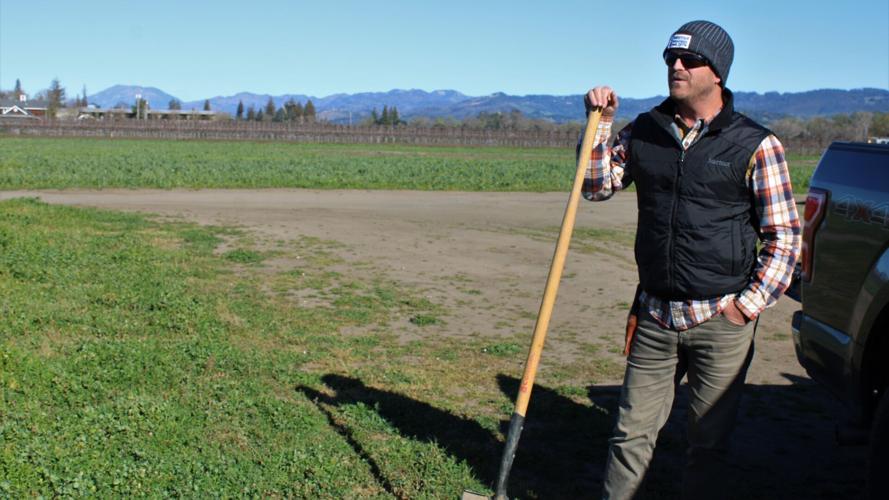
One of the first five vineyards to be fully certified with the new program is Sequoia Grove Winery, where the director of vineyards Jake Terrell has been prioritizing sustainability for the past five years.
“Napa Green looks at the holistic view of sustainability,” he said. “You have your social side, so how you treat employees, do they have good healthcare, your safety, are you buying locally, is there room for advancement with your employees?
“And then they have the economic side, which is, are you actually a sustainable business that can continue to be going on and on for years?”
“And then, of course, like most people focus on, is the environmental side, which is, I think, especially in farming, where we actually have the most impact or can potentially have the most impact,” he added.
Sequoia Grove is active in the restoration of the Rutherford Reach, contributes to the Save the Redwoods League and is a member of the “1% for the Planet” group, but the work they do onsite is by far the most impactful. Terrell and his winery counterpart, assistant winemaker Kelly Allyn, say the winery is now fully powered by renewable energy through the Deep Green program with Marin Clean Energy, in addition to the company’s water reclamation and recycling initiatives.
“One thing that I also focus on a lot, and they focus on this as well with carbon sequestration and for the health of the soil, is cover cropping,” said Terrell.
Terrell explained how cover cropping with plants like barley can help build organic matter in the soil, as well as how others can fix nitrogen levels based on how each section of the vineyard is doing.
Terrell also shows off the vineyard’s dual drip lines, which are set up so that during times when more water is needed — such as after replanting a specific section of the vineyard — they don’t need to irrigate any more than absolutely necessary.
And while this is all great, these actions require money and time.
“I think the biggest barrier for most vineyard managers is that it’s a lot of paperwork, and you have a lot of stuff to do,” said Terrell. “And obviously Napa Green and Napa County Resource Conservation District and those organizations are helping you with all of this, but in trying to check out that barrier of entry, it’s a lot to do.”
At Dominus Estate, also one of the first portfolios to get certified with the new Napa Green Vineyard program, director of viticulture and winemaking Tod Mostero has been spearheading the effort to transition to the new certification standards.
“As a vintner, the biggest difference in terms of day-to-day tasks in transitioning to Napa Green Vineyard has been a deep, permanent shift in perspective,” he said. “With our current approach to sustainability, we question every practice and have developed a new relationship with our work, our environment, and our employees … We ask ourselves how each action is improving our relationship to water, waste, social equity, energy, pesticide reduction, soil health and climate resilience.”
As a dry-farmed vineyard, monitoring the quality and health of the soil is tremendously important for Dominus to ensure they keep producing top-tier grapes without sacrificing precious resources, so Mostero has found it helpful to be more thoughtful about their communication among staff.
For example, Mostero says at their daily morning meetings, the team reviews how much water they used the previous day, discuss what activities they engaged in and discuss how they could modify them to conserve more water.
“During our yearly reviews, we talk about how to improve relationships within the team, job satisfaction and the specific areas of interest of each member of the team, [and] on a daily basis, we check in to see how our colleagues are coping with COVID and financial stresses … All of this builds a sense of stability, strength and foundational sustainability.”
Mostero also says the Carbon Farm Plan portion of the new vineyard certification has required the most work for Dominus to transition, but that Napa Green and Napa County RCD have walked them through the process of maximizing sequestered carbon.
“Because of the complexity around this subject, and the considerable impacts we can make by farming regeneratively, it will certainly require the most focus and ongoing effort,” he said.
Over at Opus One, the fact that vineyard crews have been experimenting with biochar — which is a hot topic in the world of carbon sequestration — since 2015 was a great help in adjusting to these standards. Opus had their first successful biochar-producing burn in 2018, and in 2020, used an air burner unit which left them with an essentially smoke-free burn.
“It was a very smooth transition to becoming certified as a Napa Green Vineyard,” said Angela Muscarella, Opus’s production manager. “Once we defined the principles by understanding the ‘why,’ we immediately implemented practices that reflected the principles.”
“As a result, these practices became ingrained in our day-to-day tasks, and we were able to educate Opus One as a whole.”
For Clif Family Winery, president Linzi Gay says no major changes were necessary on their end, but that the new certification is definitely “more rigorous” and is optimized for accountability.
“The work is never done, and we can always be improving, both in our individual organizations and collectively as a wine community,” said Gay. “It is important for us to keep track of our progress and achievements, and to have accountability to these best practices if we want to see real impact.”
By Sam Jones
Napa Valley wine industry reporter
You can reach Sam Jones at 707-256-2221 and sjones@napanews.com.
About Napa Green: The Napa Green 501c3 is a global leader in sustainable winegrowing, setting the highest bar for sustainability and climate action in the wine industry. Napa Green facilitates whole system soil to bottle certification for wineries and vineyards, and provides the expertise, boots-on-the-ground support, and resources to continually improve. Learn more at https://napagreen.org/participating-members/.
Anna Brittain
Napa Green
+1 805-636-3329
email us here
Visit us on social media:
Facebook
LinkedIn
Instagram
Thanks to the @naparegister for publishing this Climate Connection contribution from @napagreen’s Vineyard Program Director, Ben Mackie (@soilrainandhope) highlighting the biodiversity @grgichhillsestate.
If you loved this article, you’ll love our Birds, Bees & Butterflies: Biodiversity in the Vineyard workshop happening today!
#climateaction #regenerativeag #regenerativeviticulture

Friday night dinner dilemma?
Order takeout from @southsidenapa using promo code DONATE and 20% of your order will be donated to @napagreen.
It’s a win: win! You get dinner and @napagreen gets funding to contribute our impactful climate action work in Napa Valley.
Order online or preorder your Fried Chicken Friday pickup for February 27, 2026. Don’t forget to pair it with Napa Green certified wine! 🍽️ 🍷
#dineanddonate #nonprofit #napavalley
Join us Thursday, February 26 to learn about biodiversity in the vineyard.
🍇 Ivo Jeramaz, Winemaker & VP of Vineyards and Production at @grgichhillsestate, will welcome us to the beautiful property and illustrate the various implementation of habitat diversity they have undertaken at the American Canyon ranch.
🍇 Jo Ann Baumgartner & Sam Earnshaw from @wildfarmalliance will provide insight on how to maximize bird habitat and establish hedgerows to support the local ecology.
🍇 Erin Arnsteen from the @monarchjointventure will outline how pivotal vineyard acreage can be to support the dwindling Western Monarch populations.
🍇 Cori Carlson, owner of @napapastureprotein, will explain the ecological goals of grazing a vineyard.
🍇 Ruby Stahel from the @naparcd will join us to discuss the various resources that the RCD has to support habitat enhancement on Napa properties.
🍇 @soilrainandhope from @napagreen will talk about bees!
➡️ Ticket link in bio.
#biodiversity #regenerativeag #regenerativeviticulture
Learn about the herd of cattle calmly grazing the vineyards @ruddestate, contributing to soil health and biodiversity, in our latest post from @soilrainandhope.
➡️ Link in bio.
#climateaction #regenerativeag #regnerativeviticulture #soilhealth
Thanks to @naparegister and @kcuz for this great article about the @regenerativeviticulture and @napagreen #OneBlockChallenge field day @celaniwines.
We had a great time engaging with attendees about opportunities to implement regenerative practices in their vineyards!
If you’re regenerative curious or want to learn more head to the link in our bio!
#climateaction #regenerativeviticulture
Congratulations on @napagreen Vineyard Certification to @shadybrookestatewinery!
Nestled in the picturesque heart of Coombsville, Shadybrook Estate, has shown a deep commitment to regenerative viticulture and climate action. Visit to see the natural beauty of this hidden gem.
#climateaction #regenerativeviticulture #napagreen
We love the biodiversity in this @grgichhillsestate American Canyon Vineyard!
Come learn how to integrate biodiversity in your vineyard on February 26 at this workshop with @napagreen, @grgichhillsestate, @wildfarmalliance, @monarchjointventure, @napapastureprotein and @naparcd.
➡️ Ticket link in bio.
#Biodiversity #RegenerativeAg #RegenerativeViticulture
Congratulations to @rutherfordhillwinery on achieving @napagreen Winery Recertification!
At Rutherford Hill Winery, sustainability is apparent in all of their practices. The facility is 100% solar-powered and even contributes clean energy back to the local grid. Additionally, they prioritize natural solutions, like Owl Boxes and organic farming.
Visit to experience for yourself these exceptional wines that invest in our planet’s future.
#climateaction #winetasting #sustainablewine
Biodiversity is essential for any resilient vineyard.
Join us on February 26, 2026 at @grgichhills American Canyon to learn how to integrate biodiversity within vineyard blocks.
Experts from @wildfarmalliance @monarchjointventure @napapastureprotein and @naparcd will be on hand to discuss all the various species that a vineyard can support.
Ticket link in bio.
#biodiversity #regenerativeag #regenerativeviticulture
Learn how @closduval used Verallia lightweight glass to help reduce their environmental impact and meet their sustainability goals.
Read more at napagreen.org
#climateaction #lightenup
What a great #OneBlockChallenge first field day!
Not only was it a gorgeous day with a great community of people we also heard from some awesome speakers:
🍇 @cainethompson about the @regenerativeviticulture foundation and the implementation practices
🍇 Jordan Lonberg @coastalvineyardcare about continuous improvement and shifting the industry mindset
🍇 @soilrainandhope about the practical aspects of the regeneratives practices and how @napagreen and @naparcd can provide support
🍇 Dustin Owen @celaniwines about their their vineyard’s regenerative journey
Thanks to all who attended and to @celaniwines for hosting!
➡️ To learn more about regenerative vineyard practices or to enroll in either the One Block Challenge or Napa Green Vineyard certification, head to the links in our bio.
#regenerativeag #climateaction
Join our first @napagreen and @regenerativeviticulture One Block Challenge Field Day to hear from this great lineup of speakers, meet other participating growers, and learn how to take the first steps in implementing regenerative practices.
We look forward to seeing you on February 12, 2026 at @celaniwines to connect learn more.
Registration link in bio.
#regenerativeag #regenerativeviticulture #soilhealth
It’s hard to believe it’s already been 3 years since @marisataylorwines joined our team, but time flies when you’re having fun (and wine)!
Join us in celebrating Marisa Taylor, who is an accomplished winemaker and sustainability leader with over two decades of experience in the wine industry, and also the Napa Green Winery Program Manager, where she partners with wineries across Napa Valley to advance meaningful environmental stewardship and sustainable winegrowing practices.
Thank you for bringing your passion and positive energy to our team every day!
The team celebrated with our @napagreen certified #NapaNeighbors @rombauervineyards.
#winebusiness #womeninwine #sustainablewine
Join us for the @napagreen and @regenerativeviticulture #OneBlockChallenge first field day on February 12, 2026 from 10-12 @celaniwines.
This event is open to all winegrowers and vintners who are curious about regenerative viticulture but space is limited so register today at the link in our bio.
#soilhealth #regenerativeviticulture
Congratulations to @domainecarneros for receiving the @napachamberofcommerce Sustainable Business of the Year award presented by @mcecleanenergy.
Thank you for your leadership, innovation and dedication to sustainability and the community!
#greenbusiness #winebusiness #napagreencertified #napagreen
@antinorinapavalley family’s winemaking legacy spans over six centuries. To ensure that legacy continues, they have a deep commitment to sustainability and the care of the land for future generations.
Hear why Antinori is exploring the use of @hopenvironmental1965 soil compostable tie tape in the vineyard.
#regenerativevineyard #greenbusiness #sustainablewinery #greenpurchasing #landstewardship