Diana Snowden Seysses | Seven Fifty Daily
Domaine Dujac’s Diana Seysses explains how producers can become key players in the future of green fuel by working together to trap CO2 during vinification
Few industries bear witness to climate change more closely than the wine world.
I was born in Napa Valley and moved to Burgundy after graduating from UC Davis in 2001. Together with my husband, Jeremy Seysses, his brother Alec, and our viticulture team, we craft the wines of Domaine Dujac, founded by my father-in-law, Jacques Seysses, in 1968. I juggle this responsibility with my role as winemaker for my family’s Snowden Vineyards in Napa, where I have spent the last 20 years bringing the philosophy of terroir back to the land purchased by my grandparents in the Vaca Mountains in 1955.
Last year the Napa Valley was on fire again. Then in April, Burgundy and all of France endured a catastrophic frost which has been declared a natural agricultural disaster. As an enologist and as a land steward in these two beautiful and historic wine regions, I have recognized that there is no issue more important to our world and industry than that of climate change. The fine wine community has made impressive strides in taking decisive and direct action to adapt—and to reduce our impact.
In the last four years I have thoroughly studied my industry from the perspective of sustainability and greenhouse gas emissions. One small, transparent piece of this puzzle has particularly captured my attention and imagination: the carbon dioxide emitted by yeast during fermentation.
Though vinification doesn’t produce large volumes of CO2, it’s a point of production with an obvious opportunity for capture—and if the industry worked together, carbon sequestration during fermentation could make wine a negative-emission industry.
Why Carbon Capture Is Difficult—and Essential
Every winemaker is acutely aware of the abundance of this natural gas during fermentation. Like in all living, respiring cells, CO2 is the byproduct of yeast metabolizing sugar into alcohol. The sugar in the grapes that has accumulated over a growing season in our vineyards is digested in a matter of days in our tanks. The concentration of carbon dioxide released during fermentation is so high that the gas stings your eyes and burns your throat, and winery teams must be careful to evacuate it. Every year, tragically, people die in wine production facilities during fermentation due to asphyxiation.
Meanwhile, the planet’s atmosphere has reached 420 parts per million of CO2, a concentration not seen in 2.6 million years—back when trees grew on the South Pole. As the pendulum swings back to this warmer equilibrium, governments are already investigating direct air capture (DAC) technologies, like the privately owned start-up Carbon Engineering, to mop up 200 years of combusted fossilized carbon. DAC will be key to stabilizing the planet’s CO2 concentration so that Earth remains hospitable for those of us who evolved in the last 100,000 years. The goal: a concentration of 350 ppm of CO2 (which is higher than pre-industrial 280 ppm).
“Though vinification doesn’t produce large volumes of CO2, it’s a point in production with an obvious opportunity for capture—and if the industry worked together, carbon sequestration during fermentation could make wine a negative-emission industry.”
Direct air capture is just as it sounds: Huge fans suck air into a refinery where CO2 is removed, and then the air is returned to the atmosphere. The harvested CO2 gets transformed into other carbon-based materials, such as biofuel, or sent underground to remineralize. While DAC factories run on green energy, critics of DAC point to the huge electrical expenditure to run the fans and to concentrate the atmospheric CO2, at 420 ppm, into pure carbon dioxide.
During an alcoholic fermentation, the headspace of a tank is 990,000 ppm of pollutant-free CO2. During vinification each year winery buildings are full of pure, clean carbon dioxide—and we just blow it out the windows. I believe the ventilation of our wineries is a wasted opportunity.
Like all prototypes, the emerging carbon trapping installations are expensive. At Domaine Dujac, we were quoted 100,000 euros for an installation which transforms CO2 into organic bicarbonate. This labor-intensive process involves loading and unloading 30 tons of white powder into steel columns—at the same time as harvest and vinification is taking place, the busiest months of our year. Then, unlike CO2 capture in the cement industry, for example, we only generate CO2 during one season, which means this costly machinery would sit unused during the remaining 10 months of the year. Finally, in this nascent industry, so far there is no real market for the 30 tons of bicarbonate we would produce.
All this effort and expense would only capture an annual eight tons of CO2—a tiny amount. For perspective: One round trip flight from Paris to San Francisco in economy class generates four tons of CO2 per person. I make that trip five times each year. Or compare this to the impact of a wine’s glass bottle: Domaine Dujac’s 575-gram bottle is responsible for roughly 0.75 kilograms of CO2. The CO2 from the fermentation of the wine in that 750-milliliter bottle is approximately 0.01 grams—grams!
It’s therefore understandable why wine producers have not yet bothered to trap this natural gas. Having studied the options currently available, I have concluded that the answer to carbon capture lies in the collective. All of Burgundy could capture 20,000 tons of CO2, the entire viticultural area of Bordeaux could collect 80,000 tons annually, and the state of California an impressive 300,000 tons. Together, this would represent real, impactful CO2 reductions.
The future for carbon capture in wine would require pipelines under and around viticultural areas to move compressed carbon dioxide to one central carbon recycling center where biofuel would be produced throughout the year. If scaled, carbon capture during fermentation has the potential to transform our businesses into a negative CO2 emission industry.
Granted, nothing about this is simple or straightforward—my research has been an emotional rollercoaster marked by many disappointments. The costs of DAC remain unclear, and it can feel meaningless when the world is producing 50 gigatons of CO2 annually. (The Paris Agreement stipulates that all countries achieve zero emissions by 2050 and no nation on earth is on track to meet this goal.)
Yet carbon capture during fermentation represents something fundamentally unique in our industry’s efforts: While eliminating new glass would be a 65 percent reduction in our emissions, and using electric tractors also reduces farming emissions, this is insufficient to get us to zero emissions. CO2 capture offers the potential for negative emissions. If we plumb our wineries’ carbon to a DAC factory where they produce biofuel which is then used for air transport, we’re getting somewhere. Again, it comes back to the collective.
“Today, with climate change and its partner, globalization, the sphere surrounding our terroir is expanding to the atmosphere of Earth itself. It is our responsibility to expand our awareness of our own radius of impact.”
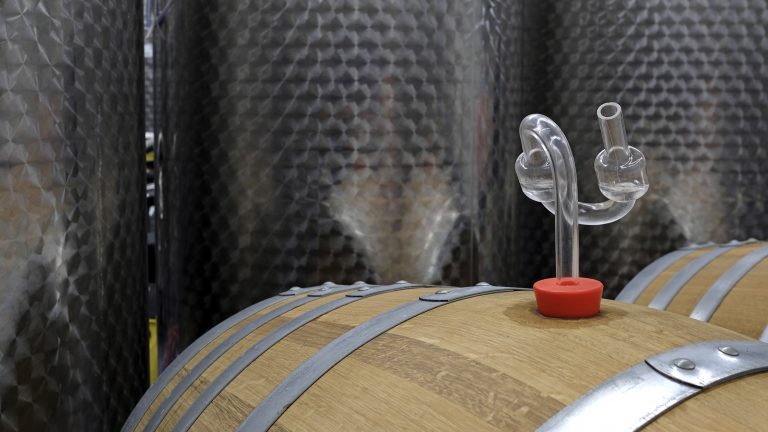
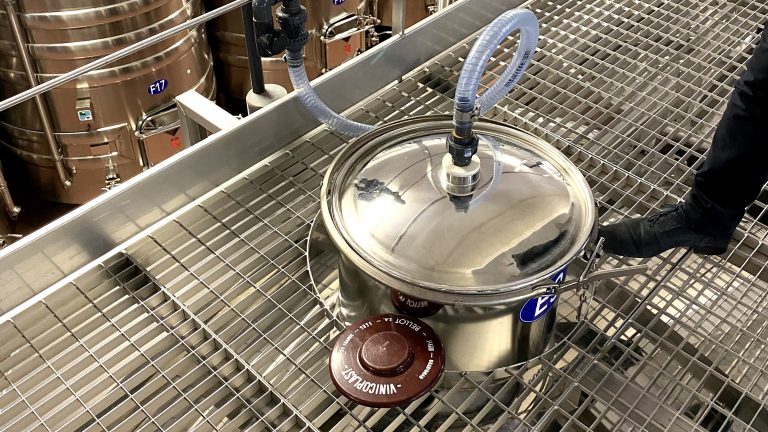
At Domaine Dujac we are building a new, eco-thoughtful winery due for completion for the 2022 harvest. We have used renewable materials; wood, recycled cork, and Burgundian straw. We’re adding charging points for cars and offering to partially subsidize our employees’ electrical cars. We have two underground tanks collecting rainwater for cleaning and vineyard applications. Finally, we have invested in stainless steel pipelines on our tanks to usher the captured CO2 to a carbon dioxide compressor outside the winery. In 2022 we will rent the above mentioned equipment to use on a trial basis before committing to the installation. In the meantime, I expect carbon trapping options to multiply.
Why Climate Change Is Terroir
Terroir is so much more than AOP vineyard designates traced onto a map, but the intersection of site, climate, and people.
The human element is vast to the edges of the infinite, encompassing tradition, savoir faire, farming choices, business choices, and even the political and economic context in which a wine region finds itself. All these variables under the “people” category inevitably circle back and impact the first two elements, vineyard, and climate.
Today, with climate change and its partner, globalization, the sphere surrounding our terroir is expanding to the atmosphere of Earth itself. It is our responsibility to expand our awareness of our own radius of impact.
In the Old World, the most important measure of success of a wine region is maintaining production over generations. Generational transition is thanks to a whole body of people working together seamlessly over time. Their greatest legacy is not the bottles left behind but how they protected and transmitted a cultural heritage. In this way, our terroirs have survived war, revolution, wine gluts, and wild speculation.
My research has led me to dozens of inspiring eco-success stories. The work of Good Goods, Gotham Project, Monarch Tractor, Napa Green, and the IWCA—to name just a few—give me so much hope. I was given a seat on Porto Protocol’s Global Steering Committee to tackle the topic of trapping carbon dioxide from wine fermentation. Visit the Porto Protocol website for hours of practical content on all subjects related to sustainability and wine.
To pass the baton, this generation of wine professionals is reorganizing wine production and distribution to slow climate change and to achieve true sustainability. Carbon recycling by DAC is inevitable. Our alcoholic fermentations give our industry an opportunity to become a key player in the future of green fuel and climate stabilization.
Diana Snowden Seysses was born and raised in the Napa Valley. She graduated from the viticulture and enology program at UC Davis in 2001, and has worked in both California and French cellars with Robert Mondavi Winery, Mumm Napa, the Araujo Estate, Château La Fleur de Boüard, Domaine Leflaive, and Ramey Wine Cellars. In 2003 Diana became the enologist at Domaine Dujac in Burgundy, and consultant at Domaine de Triennes in Provence. In 2005 she became winemaker at Snowden Vineyards in Napa Valley and in 2016 became winemaker for Ashes & Diamonds, also in Napa. She is a recognized authority on climate change as it relates to wine and holds a seat on Porto Protocol’s global steering committee.
About Napa Green: The Napa Green 501c3 is a global leader in sustainable winegrowing, setting the highest bar for sustainability and climate action in the wine industry. Napa Green facilitates whole system soil to bottle certification for wineries and vineyards, and provides the expertise, boots-on-the-ground support, and resources to continually improve. Learn more at https://napagreen.org/participating-members/.
Anna Brittain
Napa Green
+1 805-636-3329
email us here
Visit us on social media:
Facebook
LinkedIn
Instagram
There’s still time to register for the @napagreen and @regenerativeviticulture #OneBlockChallenge informational sessions!
Register for either session at the link in our bio:
December 9th from 9:00-10:00 am
December 11th from 9:00-10:00 am
#soilhealth #regenerativeviticulture
@napagreen and @regenerativeviticulture partnered to bring the #OneBlockChallenge to Napa County winegrowers!
Tomorrow is the first virtual informational and onboarding session, so bring your questions, curiosity and excitement and hop on zoom to learn more.
#climateaction #regenerativeviticulture
Help us celebrate this historic milestone!!
100% of @napagreen’s Certified Vineyard members successfully phased out Roundup, setting a new standard for wine industry leadership.
Thank you to all of our members for your continued leadership and dedication to sustainability. Your choices impact meaningful change in our industry.
#climateaction #winebusiness #regenerativeag
What makes the #OneBlockChallenge so special? Hear from @regenerativeviticulture Co-Founder, @stephen_de_mirabeau!
The first informational session is next week so come with your questions. Learn more or get involved at the link in our bio.
#regenerativeag #regenerativeviticulture climateaction
@napagreen is a non-profit focused on climate action in the wine industry!
This #GivingTuesday consider donating any amount to support regenerative farming practices, sustainable wine production, and strengthening our community.
#climateaction #nonprofit
Happy Thanksgiving! We are so grateful for our incredible members and their teams, the community, our board, and all of the people who support climate action by drinking @napagreen certified wines!
Cheers! 🍂 🍁 🍃
#climateaction #nonprofit #wineindustry
Join us @beringervyds Hudson House on December 11th for wine and updates!
At the end of each year we like to bring together our team, members, and community to discuss some of the highlights from the past year, and what’s ahead in the new year.
➡️ Ticket link in bio.
#community #nonprofit #winetasting
What is regenerative viticulture and where do I even start?!?
Last week, @napagreen and @regenerativeviticulture launched the #OneBlockChallenge in Napa, creating an accessible pathway for growers to start with just one block, while providing support and mentorship for regenerative practices.
To hear the workshop recording from @chuckschembre or to learn more about the One Block Challenge or Napa Green Vineyard Certification, head to the links in our bio.
#climateaction #regenerativeag
@napagreen has a @candiddotorg GuideStar Gold Seal of Transparency, which shows our nonprofit’s commitment to accountability. It also let donors see insights into our organization and operation to make informed donation decisions!
Our valuable climate action work cannot happen without the support of our community, members, donors and sponsors!
Want to donate or make an impact in another way? Head to the link in our bio or reach out to connect.
#climateaction #nonprofit #nonprofitorganization
Day 2 of our Growing Regenerative Viticulture event was amazing!
We learned about the onsite regenerative practices from @bedrockmorgan and @j_neustadt, heard the technical side of how these practices work from @chuckschembre, learned sampling techniques from @soilrainandhope, and saw the data and insights from @sectormentor and @grape_cowboy.
Thanks to all who attended and to @bedrockwines for hosting!
➡️ To learn more about regenerative vineyard practices or to enroll in either the One Block Challenge or Napa Green Vineyard certification, head to the links in our bio.
#regenerativeag #climateaction #vineyardmanagement #oneblockchallenge #napagreen #regenerativeviticulture #soilhealth #biodiversity #carbonfarming
Today @napagreen and @regenerativeviticulture proudly launched the One Block Challenge in Napa, an initiative to encourage winegrowers to adopt regenerative viticulture practices on a manageable scale.
We heard from an incredible group of regenerative agriculture experts, practitioners, and leaders who shared valuable insights and success stories.
Thanks to our attendees, @opusonewinery for hosting, and our exceptional speakers: @chuckschembre @stephen_de_mirabeau @cainethompson @soilrainandhope @forrestellab and @hilarysgraves.
➡️ Visit the link in our bio to sign up for the One Block Challenge or learn more!
#regenerativeag #climateaction #vineyardmanagement #oneblockchallenge #napagreen #regenerativeviticulture #soilhealth #biodiversity #carbonfarming
Applications for the California Green Medal Sustainable Winegrowing Leadership Awards 2026 awards are now open!
California’s wine industry is a global leader in sustainable practices due to the dedication of its vineyards and wineries in setting high standards for: 🍇 Environmental stewardship
🍇 Being a responsible employer and community member
🍇 Implementing innovative and sustainable business practices
We invite you to apply for the California Green Medal Sustainable Winegrowing Leadership Awards to highlight your excellence!
Apply Now at greenmedal.org/apply.
#CAGreenMedal #SustainableWine #WineIndustry #Sustainability #SustainableWinegrowing
#CaliforniaGreenMedal #WineBusiness #Wine
What Do Consumers Ask Winemakers Most Often? Chimney Rock Has Some Answers
We love this @grapecollective conversation with @elizvianna, the Winemaker and GM @chimneyrockwinery!
#sustainablewine #winetasting #winebusiness #regenerativeag
We are thrilled to be nominated for the @napachamberofcommerce Community Benefit Organization of the Year!
🗳️ Cast your vote daily from now until November 21st. Link in bio!
#nonprofit #napavalley #chamberofcommerce
Congratulations to @phiferpavittwine on achieving both @napagreen Vineyard and Winery recertification!
Phifer Pavitt has mindfully cultivated a thriving ecosystem where every element - from insects and plants to earthly materials - serves a purpose and repurpose.
We invite you to book a tasting to explore their innovative Eco Barn, serene pollinator garden, and exemplary environmental stewardship practices. When you visit, you will discover wines that not only capture a sense of place but also embody a living testament to regenerative farming from soil to bottle.
#sustainablewine #climatesmart #napavalleywine #napavalley #winebusiness #sustainablewinery #wineindustry #sustainablebusiness #womenownedwinery #landstewardship #environmentalstewardship #regenerativeag
Congratulations to the 2025 @winebusinessmonthly Wine Industry Leaders!
We`re thrilled to see many of our members, partners, speakers, sponsors, and community leaders recognized for their innovative contributions and leadership in the wine industry!
Special thanks to @napavintners President and CEO, Linda Reiff, for championing environmental efforts in the Napa Valley wine industry by establishing the @napagreen program!
#winebusiness #wineindustry #environmentalstewardship #napavalleywine #napavalley